



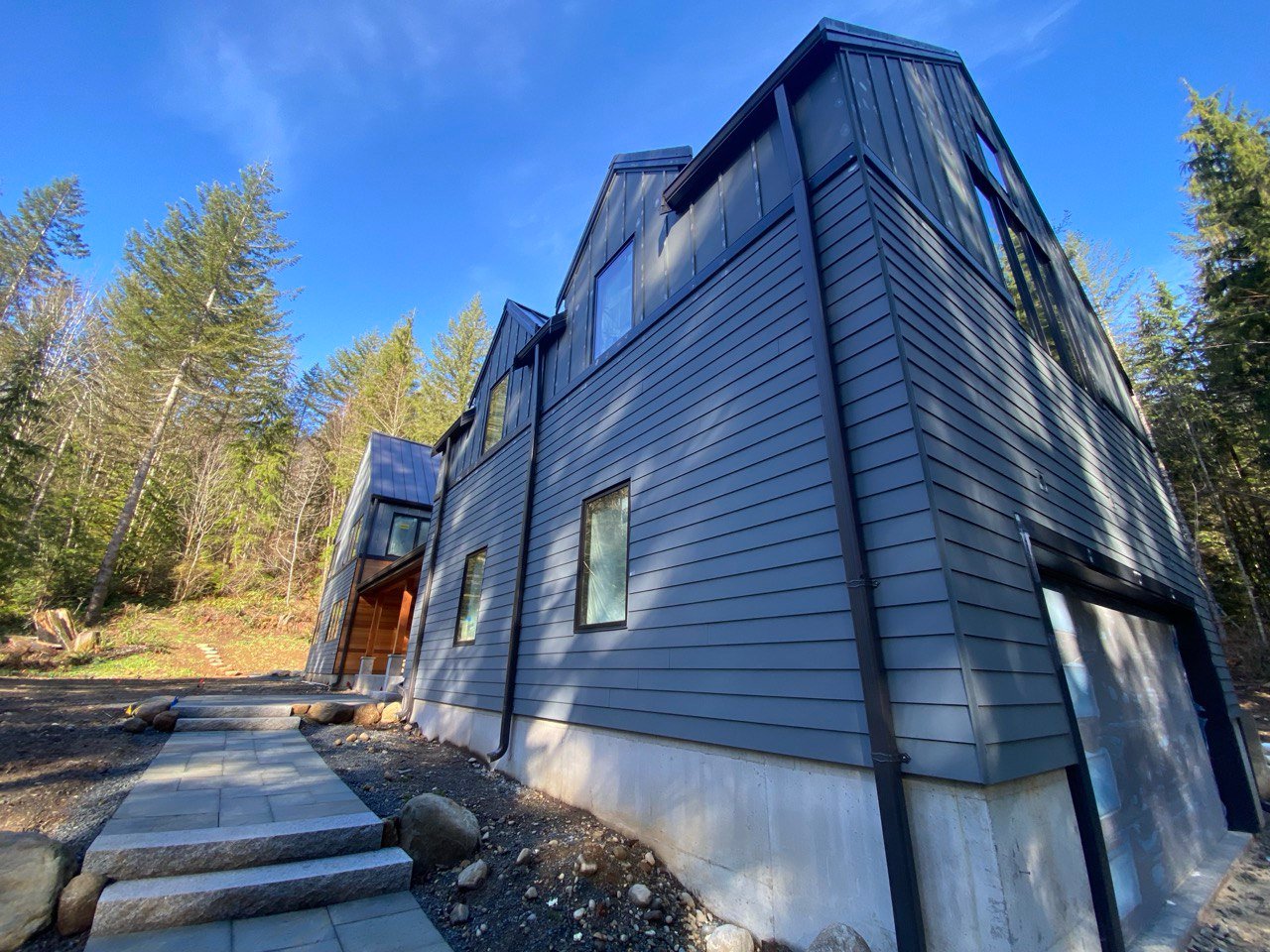
Metal Siding Installation in Seattle
Standing seam, corrugated, flush-lock — for Seattle homes that need fire resistance, zero maintenance, and a modern line. Rainwood Construction is a metal siding contractor in Seattle handling metal siding installation from substrate prep through trim. We serve residential and commercial clients across Greater Seattle with the technical detail work that metal siding demands.
We respond within 24 hours
Why Metal Siding Is Gaining Ground
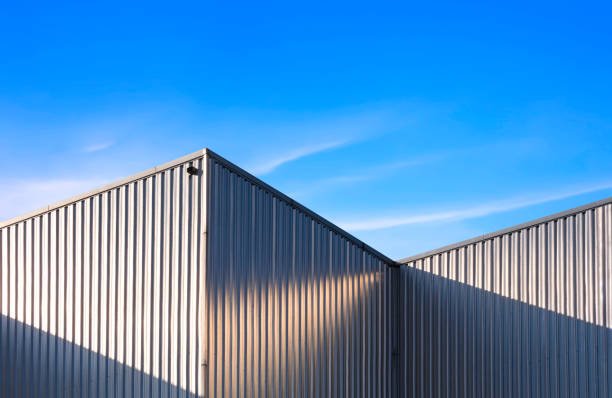
Metal used to mean agricultural buildings and warehouses. Not anymore. Standing seam and corrugated profiles show up on residential remodels all over the PNW — mixed with cedar, fiber cement, or running full-envelope on contemporary builds.
The appeal is straightforward. Metal doesn’t rot, burn, or absorb moisture. Coated steel panels carry a 25-year finish warranty and a realistic lifespan north of 40 years. PVDF coatings like Kynar 500 resist fading and chalking better than any painted wood or fiber cement finish.
But metal siding installation details matter more than with forgiving materials like vinyl. Thermal expansion on a 16-foot steel panel is ~1/8” over a 100°F swing — ignore that and panels buckle. Dissimilar metal contact triggers galvanic corrosion. Every penetration needs purpose-built flashing. Metal is unforgiving. Do it right or it shows.

Metal Siding Installation Cost in Seattle
Material ranges widely. Corrugated steel (26-gauge Galvalume) runs $2–4 per square foot. Standing seam in 24-gauge PVDF finish hits $5–9. Aluminum composite for flush looks runs $8–15. Installed with furring, WRB, flashing, and trim — expect $7–14 per square foot for steel, $10–18 for aluminum composite. A 1,500 sq ft Seattle home in corrugated lands $12,000–20,000. Standing seam full envelope on a two-story pushes $25,000–40,000. As metal siding contractors in Seattle, Rainwood Construction quotes after on-site inspection — line-item scope, not a lump sum.
Our Metal Siding Installation Services in Seattle
What Rainwood Construction covers for metal siding installation projects.

Vertical Metal Siding Installation
Standing seam and corrugated panels running vertically — the most common residential metal profile. Any vertical metal siding installation guide will spec hat channel or Z-furring over the WRB for drainage and a flat plane. We screw through furring, not through the barrier. Standing seam uses concealed clips; corrugated uses exposed fasteners with EPDM washers.
Horizontal Metal Siding Installation
Flush-lock, lap, or corrugated running horizontally. Horizontal metal siding installation needs vertical furring and careful water management — horizontal laps catch water differently than vertical runs. We back-flash every joint and use a vented base detail so moisture drains, not pools.
Corrugated Metal Siding Installation
Corrugated is the workhorse — 7/8” wave profile in 26- or 24-gauge coated steel. Corrugated metal siding installation details that matter: overlap one full corrugation, fasteners in the flat (not the crown) on walls, foam closure strips at top and bottom against insects and wind-driven rain. Most mistakes come from roofers applying roof fastening patterns to walls.
Metal Siding Corner Trim Installation
Inside corners, outside corners, J-channel, head/sill trim, transition flashings. Metal siding corner trim installation is brake-formed on site from matching coil stock — not generic off-the-shelf pieces. Every outside corner gets a hemmed edge for rigidity and a clean shadow line.
Metal Siding Repair
Dent repair, panel replacement, fastener re-seating, touch-up on scratched PVDF. Metal panels are individual units — a damaged section swaps without stripping the whole wall. Color matching is the challenge; we order from the same manufacturer and coil lot when possible.
Rainwood also offers interior renovations. Contact us to discuss your project.
See Our Work in Action
Watch how we transform homes with quality siding installation.
Common Metal Siding Problems We Fix in Seattle
Metal siding failures — usually fastening or flashing mistakes.


Metal Siding Near Saltwater: Specs That Matter
Around Puget Sound, the single most important metal siding decision happens before the first panel arrives: substrate and coating. Standard steel coatings that perform fine inland are often not warranted in direct marine exposure, so for homes near the shoreline the spec shifts — aluminum substrate or upgraded coating systems, with cut edges and penetrations treated so salt-laden air never finds bare metal. We match the material to the home’s actual distance from saltwater instead of quoting one product for every address.
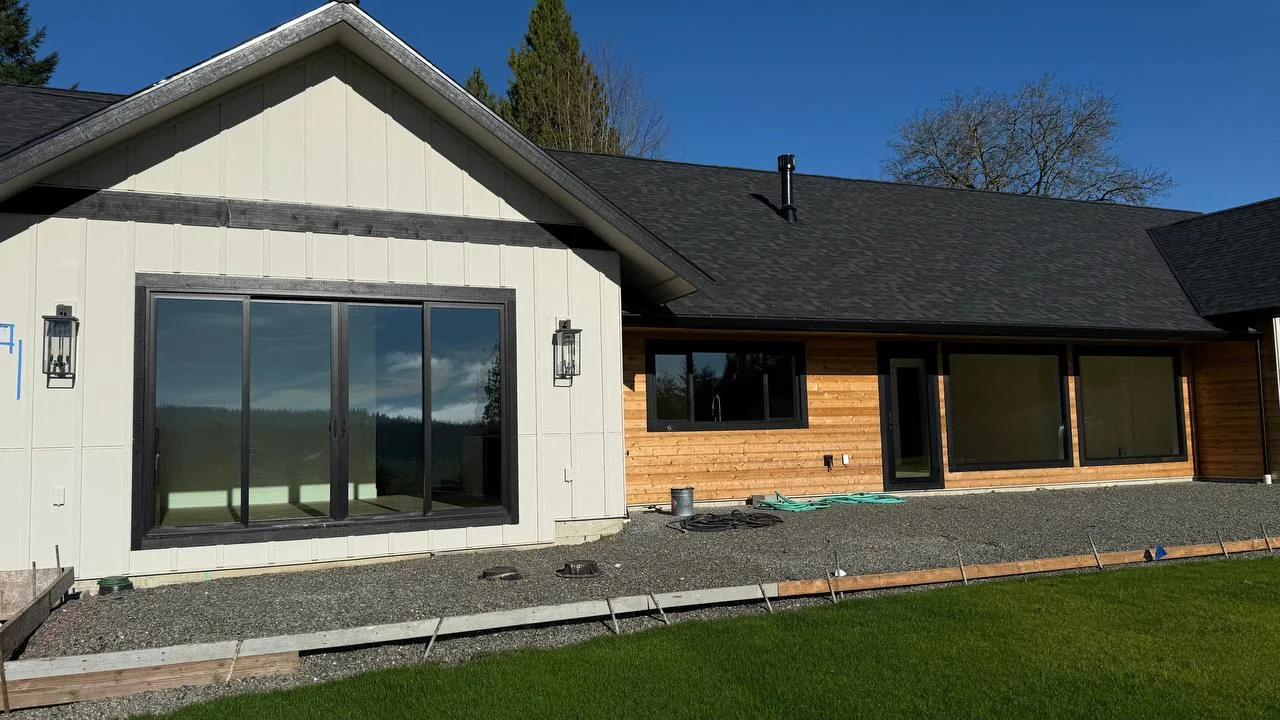
Beyond the chemistry, metal has become the signature of the region’s modern architecture — standing seam and flat panels on new builds and remodels from Seattle to the Eastside. The look depends entirely on crisp, straight installation: concealed fasteners, clean panel lines, and flashing details that shed wind-driven rain without interrupting the design.
- Substrate and coating selected for real marine exposure, not generic inland specs
- Sealed cut edges and penetrations to keep salt air off bare metal
- Standing seam and panel profiles suited to modern Northwest architecture
- Concealed-fastener installation with clean, straight sightlines
Why Choose Rainwood as Your Seattle Metal Siding Contractor
Metal siding installation details matter more than with forgiving materials like vinyl or fiber cement. Thermal movement, galvanic isolation, drainage plane — skip any and a 40-year material fails in 5. As metal siding contractors in Seattle, Rainwood Construction treats every metal job as an engineered assembly, not a cladding swap.
- Thermal expansion gaps calculated per panel length and local temperature range
- Galvanically compatible fasteners for every metal-to-metal connection
- Hat channel or Z-furring rain screen on every install — no direct-to-sheathing attachment
- Brake-formed trim from matching coil stock, hemmed edges, site-fit to each condition
10+
Years Experience
Our Recent Projects
Browse through some of our recent siding installations and repairs across the Greater Seattle area.

Great people. Showed up early and stayed late to get the job done. Work was excellent. Price was the best i found after four quotes. Would definitely use this company again.

We hired Rainwood Construction LLC to replace our French doors, and the result was outstanding. We knew going in this was more involved than a standard swap — we switched from inward to outward swinging doors, requiring extra attention to framing, flashing, and weatherproofing to keep everything sealed against water intrusion.Anatoliy was our point of contact and led the project from before to after, making sure the swing change and weatherproofing were planned and executed correctly. Igor and Vitaly handled the on-site installation and did excellent, high-quality work. The whole team was on time, professional, and delivered top-notch results. Can’t recommend them highly enough. 5 stars!

Every member of this crew I've had the pleasure of coming in contact with has been professional, excellent in their skillset, and fast. Pricing was reasonable for the excellent job they did.Last year we hired Rainwood to do plumbing and painting for a job. Both crews did such a great job, were thorough, and the level of detail was fantastic!We liked them so much we recently hired them for a quick job (installing ceiling fans). We messaged on a Wednesday and the job was done by Friday.Will absolutely hire Rainwood again and again for every job we do for our home.

Working with Rainwood Constructions on our house remodel was an excellent experience from start to finish. Their contractors were highly professional, skilled, and attentive to detail, and the quality of their work exceeded our expectations. The team communicated clearly throughout the project and ensured everything was completed on time without compromising quality. We’re extremely happy with the results and would highly recommend them to anyone planning a home remodel.

We had a very good experience with Rainwood Construction LLC and Toli during my brother’s home construction project in Shoreline. The team was professional, communicative, and paid close attention to detail throughout the process. We were especially happy with the quality of the fittings and finishing work, which turned out really well. The project was handled smoothly, and the overall workmanship met our expectations. Would definitely recommend them to others looking for reliable construction services.

We had an excellent experience with them on our sunroom project. The quality of the work was outstanding, they were easy to work with, and they clearly explained each step, the schedule, and key decisions (with various options to help us understand cost) along the way. Communication was solid from start to finish, and the final result looks great. Highly recommend, they are my new go to recommendation when friends ask.

OUR SIMPLE PROCESS
How Our Seattle Metal Siding Installation Process Works
Request a Quote
Call or use the form. Tell us what look you’re going for — corrugated, standing seam, mixed with wood — and what’s on the house now.
On-Site Assessment
Wall flatness check, substrate evaluation, moisture readings. Metal is unforgiving on wavy walls — we identify where furring or shimming is needed.
Clear Scope & Schedule
Panel manufacturer, gauge, finish, trim details, furring spec, labor breakdown. Most metal re-sides run 6–12 working days depending on profile complexity and mixed-material transitions.
Installation
Tear-off (if needed), WRB, furring, flashing, panels, trim, sealant, cleanup. Walkthrough before closeout.
Ready to Get Started?
Contact us today for a free on-site assessment. We’re here to help protect your home.
Call us now
425-750-1025
Email us
Anatoliy@rainwoodconstruction.com
Visit us
12310 Hwy 99, Everett, WA 98204
Hours
Mon-Fri 9:00 am–6:00 pm, Sat 11:00 am–5:00 pm, Sun Closed
FAQ
Coated steel with PVDF finish — 40–50 years realistically. The coating does the heavy lifting. Kynar 500 resists fading and chalking far longer than polyester coatings. Uncoated steel weathers to matte grey and lasts structurally just as long but won’t hold consistent color.
Zinc-aluminum coated steel resists corrosion well — the alloy layer sacrificially protects the base steel. Cut edges are the vulnerability. Every field cut exposes raw steel, so we seal them with manufacturer touch-up and keep them from standing water. Aluminum panels don’t rust at all but cost more.
Excellent here. Metal sheds rain instantly, absorbs no moisture, handles temperature swings without rot risk. In coastal areas, use coated steel or aluminum — not bare steel. Main PNW concern is moss in corrugation valleys on shaded walls. Periodic wash-down handles it.
Yes — and it’s one of the most common approaches in Seattle residential remodels. Corrugated or standing seam panels pair well with cedar, fiber cement, and concrete board. The key is the transition detail: where metal meets another cladding, you need a purpose-built flashing piece, not sealant. Metal siding contractors in Seattle who do mixed-material facades need to plan those transitions before panels go up, not after. We draw the transition conditions in the scope before any material is ordered. Common combinations we install in Seattle: corrugated steel lower half with cedar shiplap above, standing seam on gable ends with HardiePlank on the main walls, and full-envelope metal with wood trim accents.