



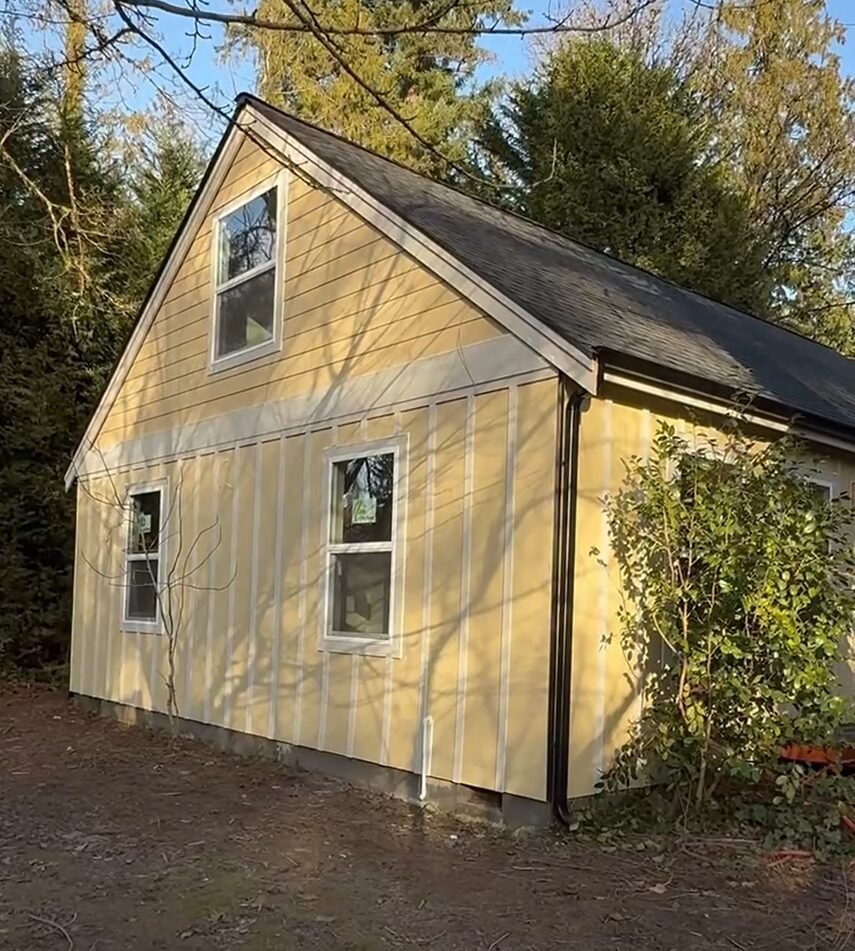
Aluminum Siding Installation
Fireproof, rot-proof, and built for salt air. Aluminum siding still earns its place on PNW homes — especially where fire rating or marine exposure rules out other materials. Rainwood Construction handles aluminum siding installation from tear-off through trim.
We respond within 24 hours
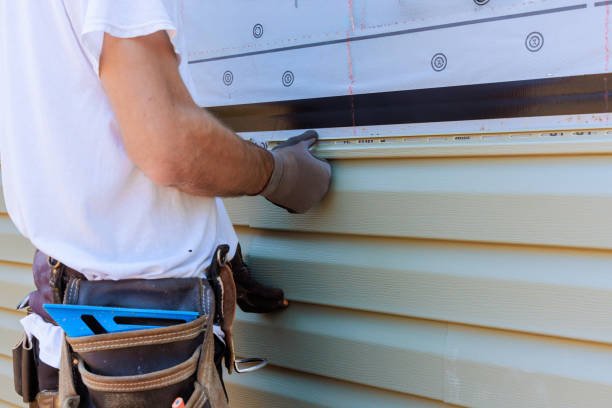
Where Aluminum Makes Sense in 2026
Aluminum had its peak in the ’60s and ’70s. Most homeowners today jump straight to fiber cement or vinyl — and for typical suburban homes, that’s the right call. But aluminum isn’t obsolete. It’s just specific.
Fire-rated assemblies. Coastal properties where salt air corrodes steel and degrades engineered wood panels. Commercial mixed-use with code requirements vinyl can’t meet. Mid-century homes where the owner wants the original profile and character. Those are aluminum jobs.
Residential gauge is 0.019″–0.024″, roll-formed into horizontal lap, vertical board-and-batten, or flush panels. Won’t rot, won’t support mold, carries a Class A fire rating without treatment. Weight is about 0.2 lbs per square foot — lighter than vinyl, far lighter than Hardie.
Downsides are real. Aluminum dents on impact, shows scratches, and the finish chalks after 15–20 years. It conducts heat — without foam backing, zero added R-value. None of that matters if the application calls for it.
Aluminum Siding Installation Cost
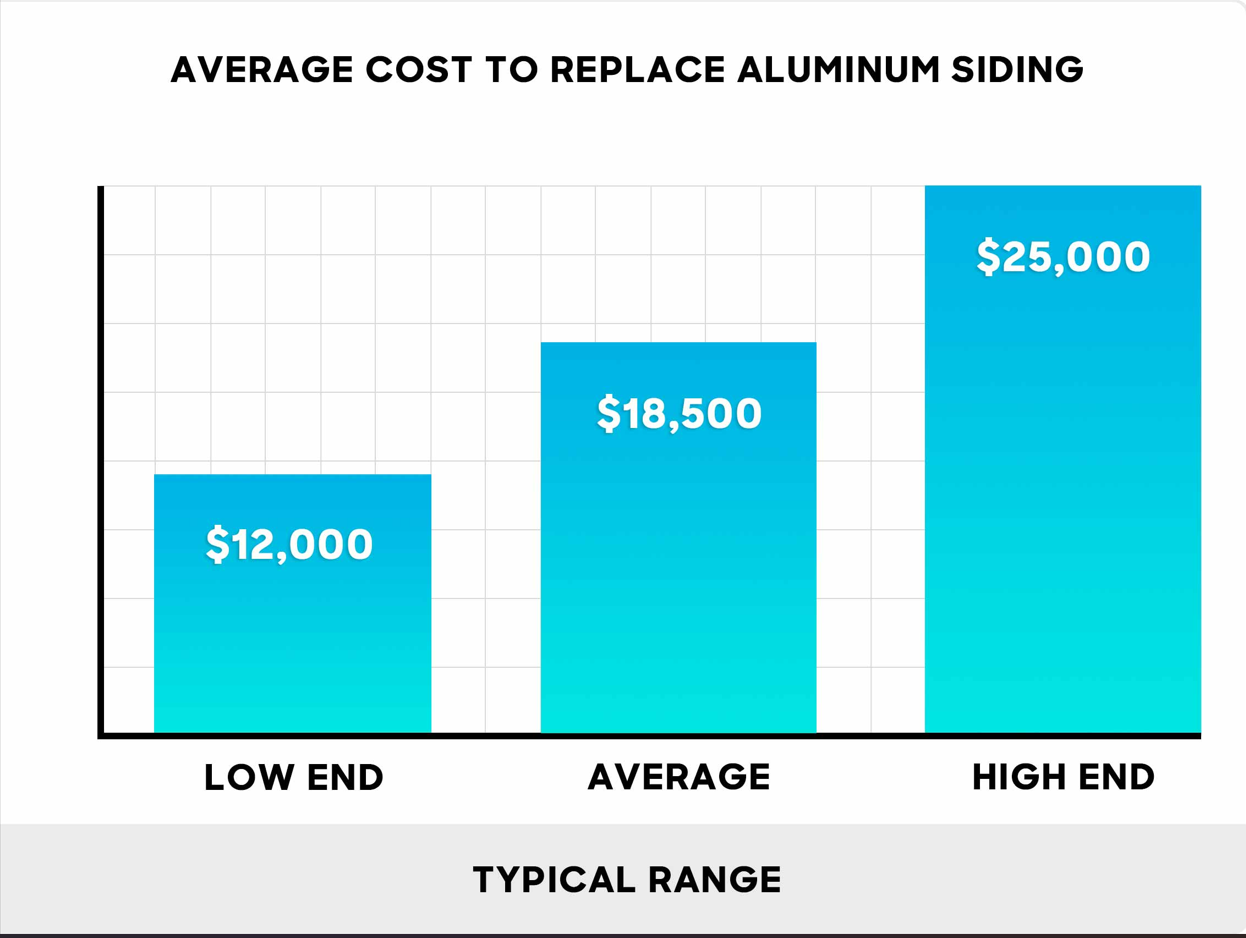
Material runs $2–4 per square foot for standard 0.019″ residential panels. Heavier gauge (0.024″) and insulated-back panels push that to $4–6. Installed with labor, trim, flashing, and weather barrier — expect $5–8 per square foot total.
That’s comparable to fiber cement and higher than vinyl. The premium buys fire resistance, zero moisture absorption, and marine-environment durability. A 1,500 sq ft ranch typically lands between $8,000 and $14,000 depending on wall condition and trim complexity.
Wall condition is the wild card. Rainwood Construction starts with a physical inspection — moisture meter, probing at transitions, written scope with line items.
OUR SIDING SERVICES
What Rainwood Construction covers for aluminum siding installation projects.

Full Aluminum Siding Installation
Tear-off, sheathing inspection, house wrap, flashing at every penetration, starter strip, panels, and trim. Aluminum siding installation instructions specify blind-nailing with aluminum or stainless fasteners — galvanized steel causes electrolytic corrosion at dissimilar-metal contact. Galvanic reaction eats the aluminum in 3–5 years. We use aluminum ring-shank nails exclusively.
Aluminum Re-Siding Over Existing
When existing substrate is solid, aluminum can go over old aluminum or vinyl without full tear-off. We verify sheathing integrity, add furring strips for a flat plane if needed. Not always the right call — any moisture behind old material means tear-off is the only option.
Aluminum Trim, Fascia & Soffit
Aluminum coil stock brake-formed on site for fascia wraps, window returns, and corner details. Custom-bent to the exact profile of each run — no exposed wood on the exterior, nothing to paint or rot. Standard scope on every full aluminum re-side.
Foam-Backed Insulated Panels
Factory-laminated polystyrene backer adds R-3 to R-5 and eliminates the hollow sound of unbacked aluminum. Worth the upgrade on any home where energy performance matters. Adds roughly $1.50–2.00 per square foot over standard panels.
Aluminum Siding Repair
Dent repair, panel replacement, touch-up painting, re-securing loose panels. Profile matching on older aluminum is easier than vinyl — profiles changed less over the decades. Color matching is harder. We source factory-matched touch-up when possible; otherwise field-spray with bonding primer and acrylic topcoat.
Rainwood also offers interior renovations. Contact us to discuss your project.
COMMON PROBLEMS WE FIX
Aluminum siding issues we see on Pacific Northwest homes.
WHY CHOOSE RAINWOOD CONSTRUCTION?
alert.svgalert.svg, and most crews don’t install it regularly. That leads to mistakes — wrong fastener metal, skipped backer, panels locked tight without thermal expansion allowance. Aluminum expands more than fiber cement or vinyl. Ignore that and panels oil-can in summer.
- Aluminum-only fasteners — no galvanized steel, no electrolytic corrosion
- 1/16" thermal expansion gap at all panel ends per manufacturer spec
- Custom brake-formed trim on site — no pre-made stock that doesn't fit
- Full wall prep: WRB, flashing, moisture check before any panel goes on
10+
Years Experience
Our Recent Projects
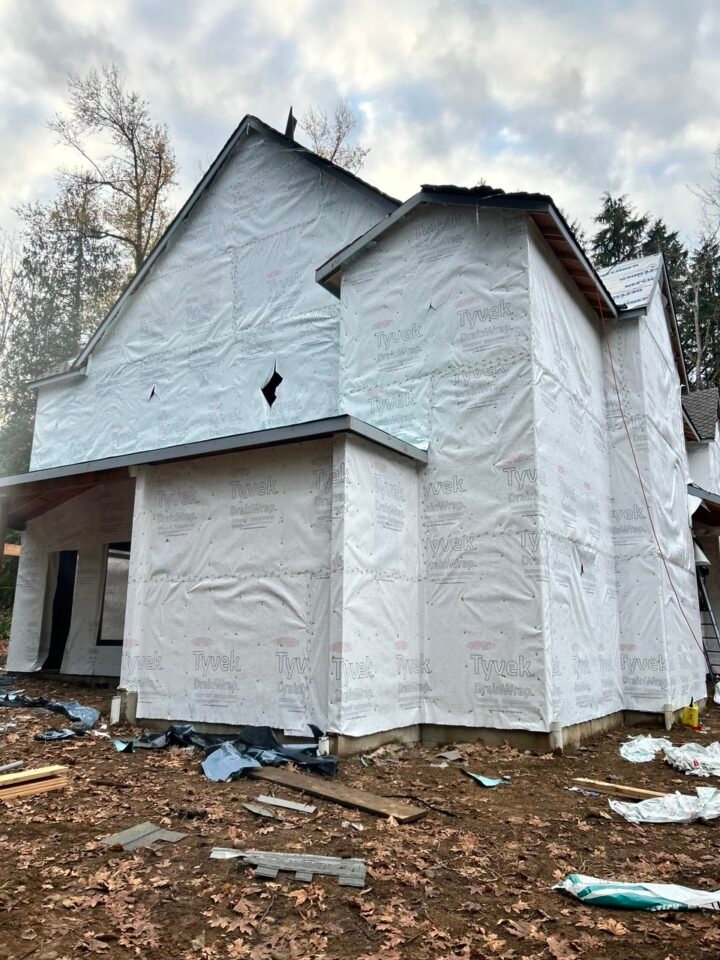
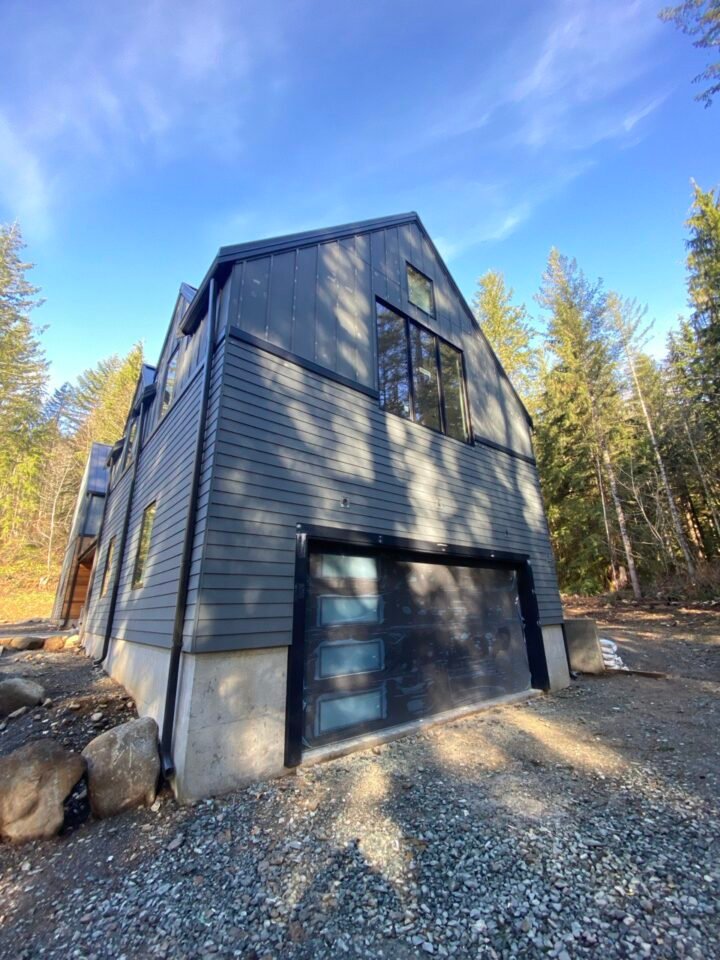
Browse through some of our recent siding installations and repairs across the Greater Seattle area.

We had an excellent experience with them on our sunroom project. The quality of the work was outstanding, they were easy to work with, and they clearly explained each step, the schedule, and key decisions (with various options to help us understand cost) along the way. Communication was solid from start to finish, and the final result looks great. Highly recommend, they are my new go to recommendation when friends ask.

Rainwood construction completed 2 projects in my home recently. The first, which was to add a bar in my family room, which when completed fit so well that it looked like it always belonged there. It came out exactly how we wanted it and we love it. The second project was to completely remodel and modernize my 1955 original kitchen. The kitchen turned out fantastic! It’s light and bright with clean lines exactly how we had envisioned it. The team was polite, competent, hard working and always cleaned up after themselves at the end of the day. They always made sure to ask how I wanted things done when there were options, making suggestions where needed and made sure I was happy with the completion of items along the way. I was very pleased with the quality of the work, plan to use them again in the future and have already recommended them!

Excellent work done ✅ I’m really impressed and looking forward working further. Recommend 👍

Anatoliy and his company, is great person to have a business with!!!

We just remodelled the entire main floor of our house; the scope included changing floors, installing new cabinets including a drop ceiling, added a custom entertainment wall, and fully upgraded the powder room, among other work such as electrical upgrades including an EV plug. We are overall very happy with the work that the team has done, satisfied with the cost, and definitely recommend them to others.

Toli did great work renovating our home and upstairs bathroom. It was a great change.

Our Simple Process
From first contact to final walkthrough, we make siding projects straightforward and stress-free.
Request a Quote
Call or use the form. Tell us what's on the house, roughly when it was built, and what's going on — dents, chalking, water issues.
On-Site Assessment
Moisture meter, visual inspection, probing at windows and transitions. Written report — yours to keep.
Clear Scope & Schedule
Panel gauge, profile, color, trim details, labor breakdown. Most aluminum re-sides run 5–9 working days.
Quality Installation
Tear-off (or overlay if applicable), wall prep, WRB, flashing, panels, trim, cleanup. Walkthrough before closeout.
Ready to Get Started?
Contact us today for a free on-site assessment. We’re here to help protect your home.
Call us now
425-750-1025
Email us
Anatoliy@rainwoodconstruction.com
Visit us
12310 Hwy 99, Everett, WA 98204
Hours
Mon-Fri 9:00 am–6:00 pm, Sat 11:00 am–5:00 pm, Sun Closed
FAQ
The material lasts 40–50 years. What fails is the factory finish — chalking and fading after 15–20 years on sun-exposed elevations. Panels can be repainted with bonding primer and acrylic topcoat for another 10–15 years. Structurally, aluminum outlasts most siding on the market.
For specific applications — yes. Fire rating, salt air resistance, and longevity make it right for coastal homes, wildfire zones, and mid-century restorations. For a typical suburban re-side, fiber cement or vinyl usually makes more sense on cost and curb appeal.
Over flat surfaces with solid sheathing — yes, with furring strips for a true plane. We don’t overlay if there’s any sign of moisture damage underneath. Trapping water behind a new layer is the most expensive mistake in siding.
Standard 0.019″ gauge dents from direct impact — hail, ladders, a kicked soccer ball. Heavier 0.024″ is noticeably more resistant. Foam-backed panels hold up better since the backer supports the face. For high-traffic areas or hail zones, we recommend 0.024″ with insulated backing.